

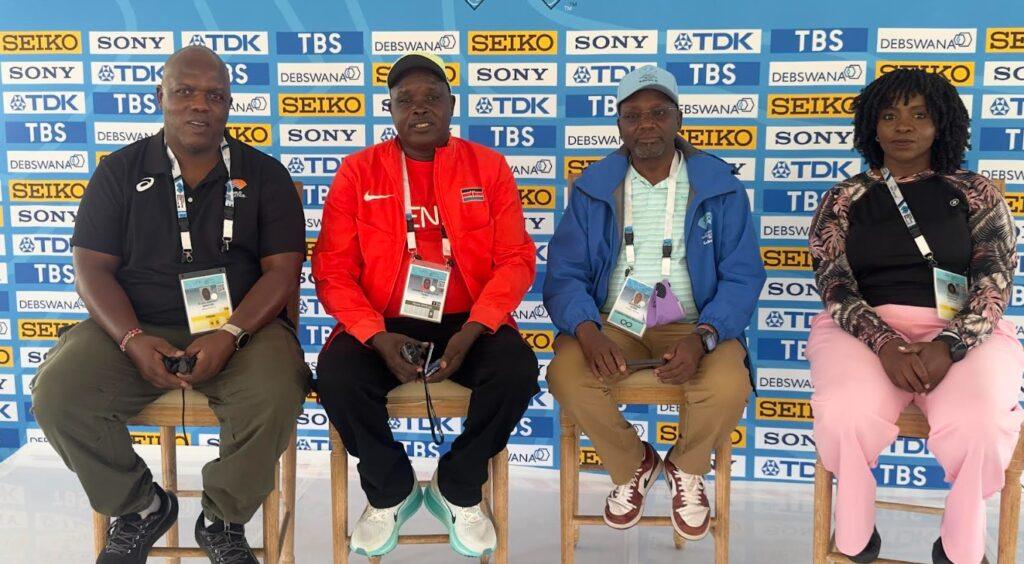
By Elias Makori
Botswana didn’t just host the Debswana World Relays earlier this month — it rolled out the red carpet, set the stopwatch on fire and reminded the world that Africa can organize a global sporting spectacle with the precision of a Swiss watch and the rhythm of an Afrobeats anthem.
More importantly, the event flung open doors, windows and perhaps even a few skylights of opportunity for the continent.
The two-day competition reached fever pitch on Sunday, May 3, when Botswana’s home quartet of Lee Bhekempilo Eppie, Letsile Tebogo, Bayapo Ndori and 400 metres world champion Collen Kebinatshipi brought the National Stadium to its feet.
In front of Botswana’s Head of State, Advocate Duma Boko, and World Athletics President, Seb Coe, the four sprinting musketeers stormed to gold in the 4x400m relay in a championship record of 2:54.47 — a time so fast it probably left the stadium clock gasping for air.
Among Africa’s quick wins at the championship was the appointment of Kenya’s Barnaba Korir as the continent’s first-ever Technical Delegate at a World Athletics global championship — a milestone that quietly shouted, “Africa has arrived!”
The Iowa State University distance running Hall of Famer’s appointment forms part of President Coe’s deliberate push to make athletics truly global and to cement one of his most cherished legacy projects for Africa.
“The whole purpose of world championships is not just about medals tables and championship records — important as they are because they excite people — we also have a responsibility to build a legacy — both hard and soft, human and infrastructural — that we can leave behind,” Coe said in Gaborone.
Singling out Botswana sprints sensation Tebogo’s involvement in kids’ athletics, Coe pointed to it as one of the most meaningful legacies global competitions can leave for Africa. After all, every superstar starts somewhere — usually on a dusty track, in borrowed spikes, chasing a dream and occasionally a runaway baton.
“This is not new to us at World Athletics,” Coe said. “We have been the torchbearers for kids’ athletics, and many federations have used our model over the years. I spoke to some of the technical teams and educators at Fifa who said they were using our programme 25-30 years ago.”
He added that World Athletics has worked hard to digitize and simplify these programmes so they can reach more communities and languages across the continent.
“This is a great opportunity off the back of these championships to create a stronghold for kids’ athletics, particularly in Africa, because we think this is where some of the biggest differences will be made,” Coe said.
The World Athletics president believes the next half century of athletics will, in many ways, carry a distinctly African accent: “We know that over the next 50 years, the story will largely be about the African continent and its contribution to athletics,” he said. “The legacy here is also about developing the competence of national federations to deliver more events.”
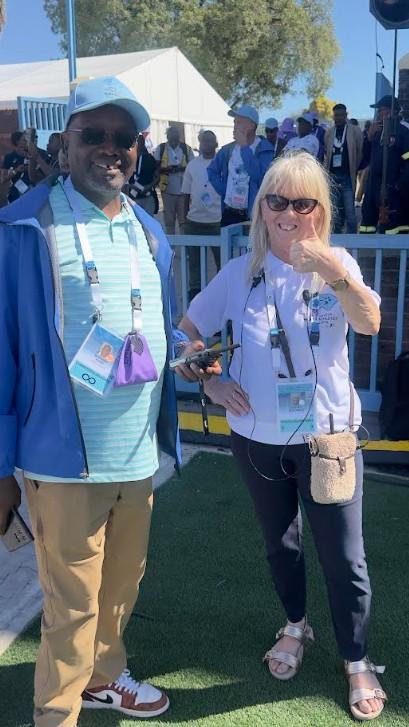
Coe — Olympic champion, middle-distance legend and a man who probably ran faster before breakfast than most people do all week (on that Gaborone morning, he had just done one hour on his hotel treadmill at a pace probably close to that of his now famous namesake Sebastian Sawe) — also emphasized the federation’s deliberate investment in developing human capital in Africa.
“We have an opportunity here to create human capacity to design and deliver events, and human capacity around the technical necessities of putting events on,” he explained.
“Our ability to roll out Technical Delegates across the continents has historically been challenging, sometimes culturally, but these are important legacies.”
And World Athletics didn’t just talk the talk — they handed Korir the starter pistol. His appointment as Technical Delegate for the Debswana World Relays offered the Kenyan official an enviable platform that he sees as significant for the growth of athletics in both Kenya and Africa.
Chairman of Athletics Kenya’s Youth Development Committee and First Vice-President of the National Olympic Committee of Kenya, Korir wears many hats — thankfully none requiring a relay baton exchange zone.
His latest assignment adds to a growing résumé that includes leading technical operations at the Kip Keino Classic World Athletics Continental Tour Gold meeting, as well as the Sirikwa Classic and Chepsaita cross-country championships.
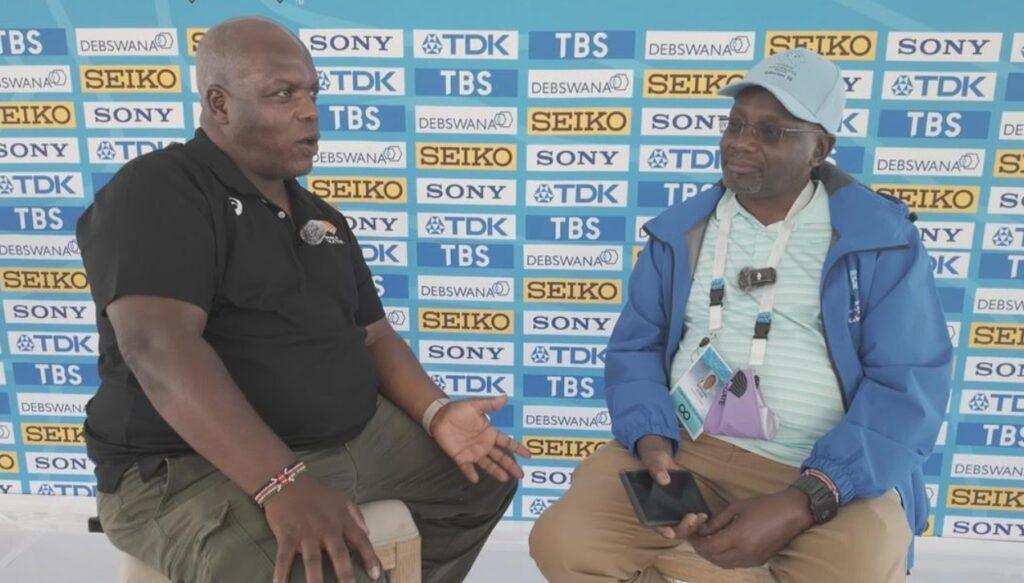
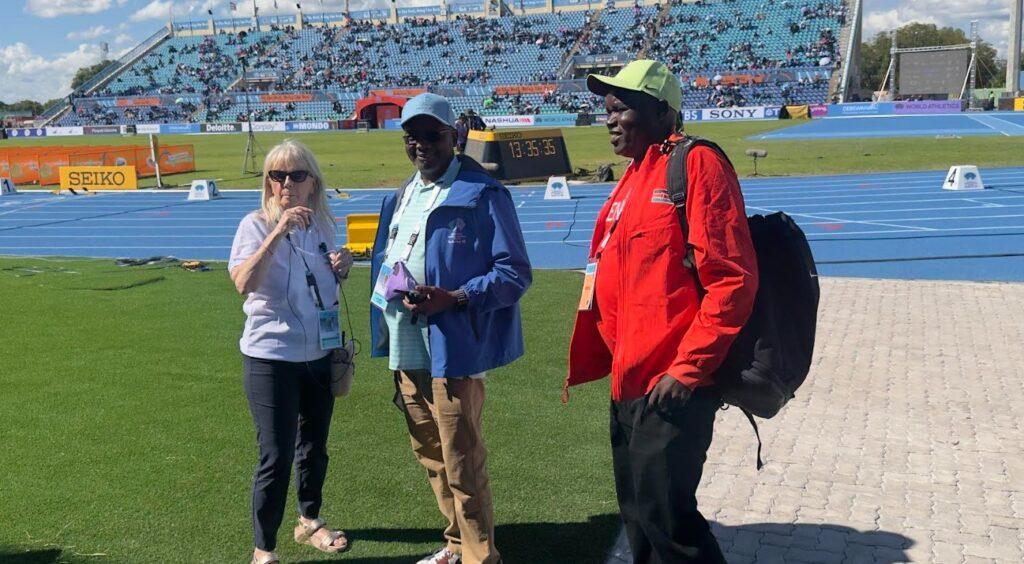
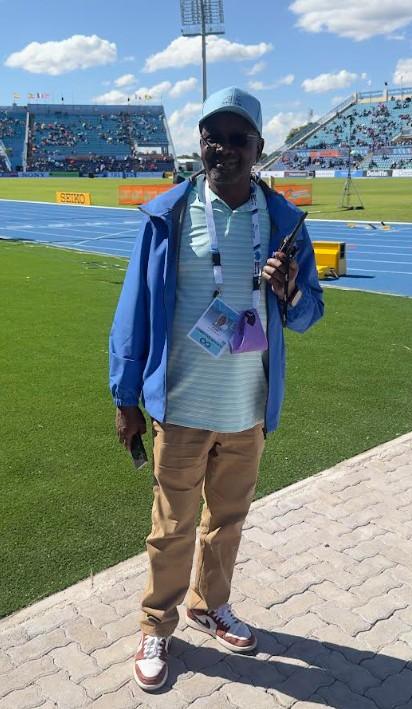
I shadowed the bespectacled official around the National Stadium in Gaborone during his global debut at the Debswana World Relays to find out what his appointment means for athletics in Kenya and across Africa. Excerpts:
Elias Makori: What does your appointment mean for Kenya and Africa generally?
Barnaba Korir: This is a very important appointment. It was a big surprise for me considering that I’m mainly involved in organization of events, but when it came, I took it as a challenge and it’s a new experience, very different from what I’ve been doing but very much related to that.
For Kenya, it is a recognition of the activities that we have done, especially the major events that we have organized, including the Kip Keino Classic and others.
This is something that we as Kenyans and Africans should be proud of.
But then, it also gives us a challenge to prove that, yes, World Athletics believes in what we are doing, but we need to improve on our organizational structures, financial support for the sport and, of course, the technical skills that have enabled us to organize such recognized events and that’s why we were appointed to come to Botswana to oversee this event.
We have to make sure that it’s successful, to confirm that what we have been doing in Kenya is what is expected in a world-class event.
E.M.: From a layman’s point of view, take us through the work of a World Athletics Technical Delegate.
B.K.: The Technical Delegate is the person in charge of the delegates and technical officials, and has to make sure that all the rules and regulations governing the organization of such events, like these World Relays, are adhered to.
This covers departments like technical, media, accommodation, or the Athletes’ Village where the Technical Delegate must make sure that all the setup is according to the rules set by World Athletics… there are many other areas that the Technical Delegate is required to oversee at the event.
So, in a nutshell, the Technical Delegate is the overall personal that ensures that all these regulations, including competition rules, are observed.
E.M.: So, is the busiest period just before the competition, or during the competition itself?
B.K.: The busiest period is three to four days before the event itself, putting together the infrastructure and all systems. Just before the start of the events, we do the “Zero Test” to ensure that the electronic timing machine is within the limits that are given, and then, of course, you go round through to ensure that the medical and anti-doping areas, warm-up areas, Call Room One, Call Room Two, etc, are in order and ensuring that when the athletes are there, they are given the necessary support before they enter the competition arena.
Competition day is basically to see a few areas to be observed and to support the Local Organising Committee, the Meet Manager, the Competition Director and all other officials that are within this environment.
The pressure reduces where everything is in order and that’s why you see me here relaxed with a walkie-talkie calling to ensure all is well – it’s not like at the Kip Keino Classic where you have to be everywhere! This is really exciting and I find it a great opportunity to deliver the way World Athletics want.
E.M.: This is the first senior World Athletics track competition in Africa. What does it mean to have an African Technical Delegate in charge at this groundbreaking event? Secondly, we have seen world-class track competitions come up recently in Addis Ababa, Pretoria, of course Nairobi and also Gaborone. Is this the time, perhaps, to have an African version of a “Diamond League” circuit?
B.K.: Elias, what I know behind the scenes is that there are very nice things coming (to Africa), and that is why Kenyan technical officials were invited here in Botswana. You will also realise that there are other ITOs (International Technical Officials) here from Africa – from Nigeria, South Africa, Uganda… and other areas.
You will realize that World Athletics has began focusing on Africa as the area where athletes come from and also it’s potential to organize major events.
I was in Addis Ababa the other day and saw World Athletics were focusing to make sure that Ethiopia has a great event and before the end of the day, they had already elevated the Addis Ababa Grand Prix from Bronze to Gold Label status.
I have discussed with Pierce (O’Callaghan), the Head of Competition Management at World Athletics, and he has very beautiful ideas about Africa, like how we can organize a series of events in Africa within a month, so that we can have one in Addis Ababa, Nairobi, in South Africa and also Gaborone… a series of events that can then culminate in the start of the Diamond League in Doha on May 7, 2027.
If you look at it, and try to dissect what is happening, you will see that this is the time that Africa should take that initiative already started.
That’s why we are asking the Governments of Kenya, Ethiopia, South Africa and Botswana to support these events and give a chance to our young athletes.
I’d like to also thank you also for doing a good job in making sure that you continue supporting the athletes by reporting about what they do.
We really want to bring our resources together and bring Africa out so that the world can come to Africa. Soon we are going to know the position that Kenya is taking in this regard.
E.M.: Finally, your thoughts about Kenyan sprinters at the World Athletics Relays?
B.K.: The dynamics of sport are changing. You have seen the performance of sprinters, especially in Kenya, led by Ferdinand Omanyala. Since Omanyala came onto the scene, things are changing and we are now having very many young athletes coming up, especially the women where we have Mercy Oketch and Mercy Chebet doing very well…
The sprinters are actually enjoying a better position to qualify for the World Championships next year in Beijing and the Ultimate Championships in Budapest later this year.
In Kenya the attitude is shifting towards the sprints and the middle distance.
When we organize events, people are excited to see the 100m, 400m and the shorter races. This means that we must ensure that in Africa we need to have infrastructure supporting the sprints and field events and, eventually, the perennial winners in the middle and long distance so that Kenya can compete favourably at the 2028 Los Angeles Olympic Games.
E.M.: Thank you Mr Korir.
B.K.: Thank you “Azzurri.” Happy to meet you here!
elias.makori@ymail.com
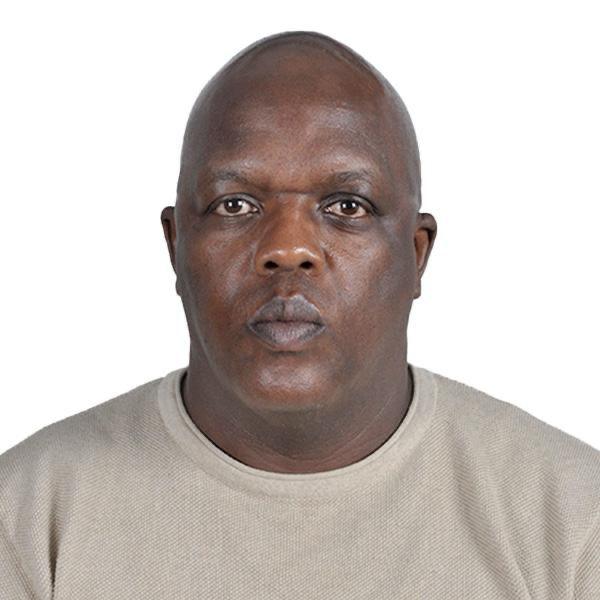
Elias Makori, the founder and Managing Editor of Pura Vida Sports Africa, is a veteran sports journalist with over 30 years’ experience. Makori is a holder of a Masters in Sports Management degree from Barcelona’s Cruyff Institute and is also the 2012 World Athletics Journalist of the Year, three-time Kenya Sports Journalist of the Year and twice Africa Sports Media Personality of the Year.
Stay in the Know! Subscribe to our Official Newsletter for periodical updates.